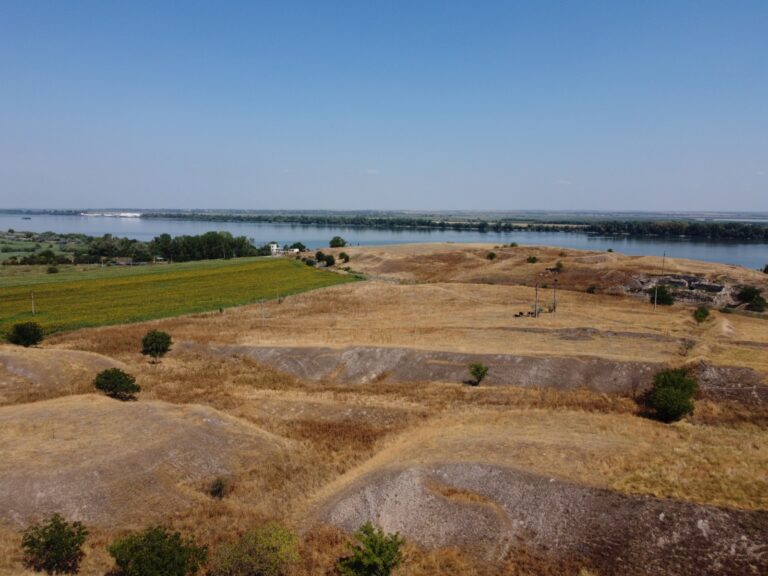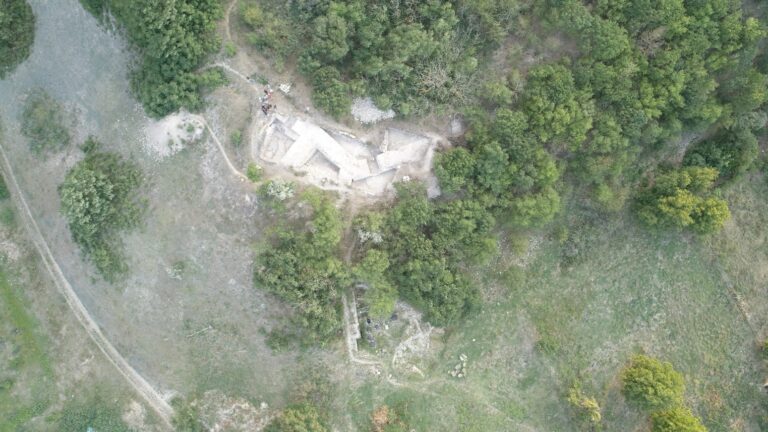
The Salsovia Fortress, located on the Sfântul Gheorghe branch of the Danube River, is part of the chain of Roman and then Romano-Byzantine fortified settlements that ensured the stability of Roman rule in the area between the Danube and the Black Sea, starting with the 1st century AD and until the first decades of the 7th century. Due to its strategic position, but also due to the artifacts that could be collected from the fortress area, the fortress of Mahmudia came to the attention of researchers at the end of the 19th century. It is, moreover, one of the first fortresses between the Danube and the Black Sea that could be identified in the field by toponym, in accordance with the distance calculations from ancient itineraries.
Using written sources, but also archaeological materials interpreted, for the most part, correctly, Vasile Pârvan, at the beginning of the 20th century, was the one who ossified the idea that the fortress framed by Aegyssus and Halmyris and guarding the southernmost arm of the Danube was Salsovia.
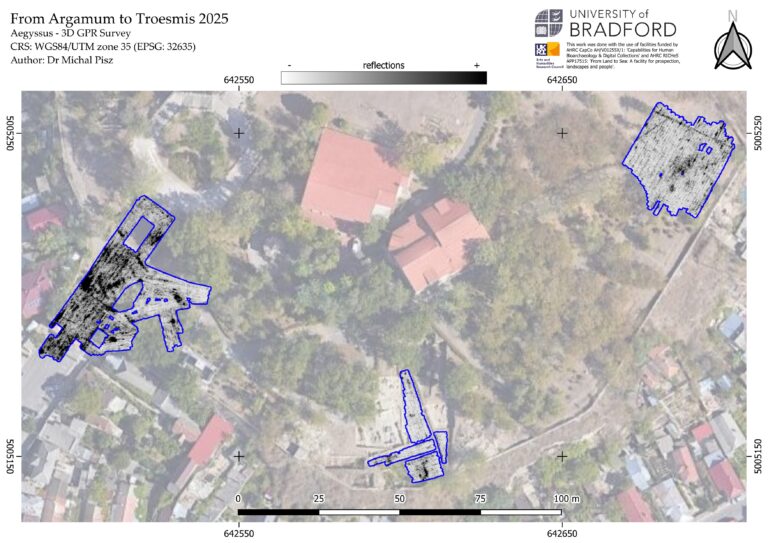
The Salsovia site, which includes, in addition to the fortress itself, the Getic settlement on the western side, but also at least two other Roman civilian settlements in the south and west of the fortification, has not benefited, to date, from systematic archaeological research. There has, however, been at least one attempt by a team of archaeologists from Great Britain, together with Romanian colleagues, to initiate such a project. They carried out in 2003 a series of geophysical scans, aerial photographs and a topographical survey of the fortress area. The project was continued the following year by carrying out surveys that attempted to establish the extent of the site’s damage from trenches dug during World War I, and on the other hand, they wanted to capture relevant complexes that could be researched. The results, important as they were, could not be confirmed by research in subsequent campaigns.
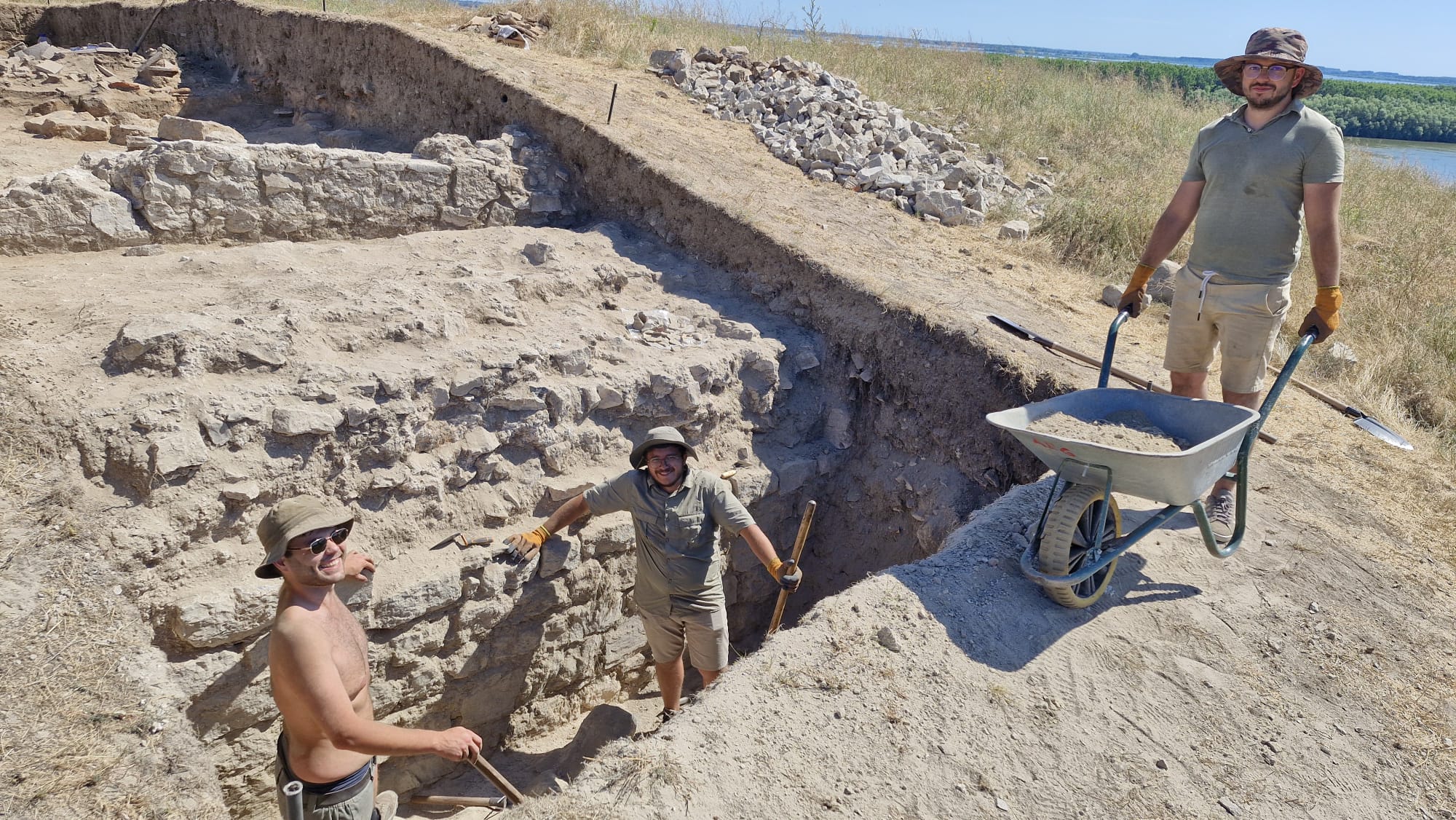
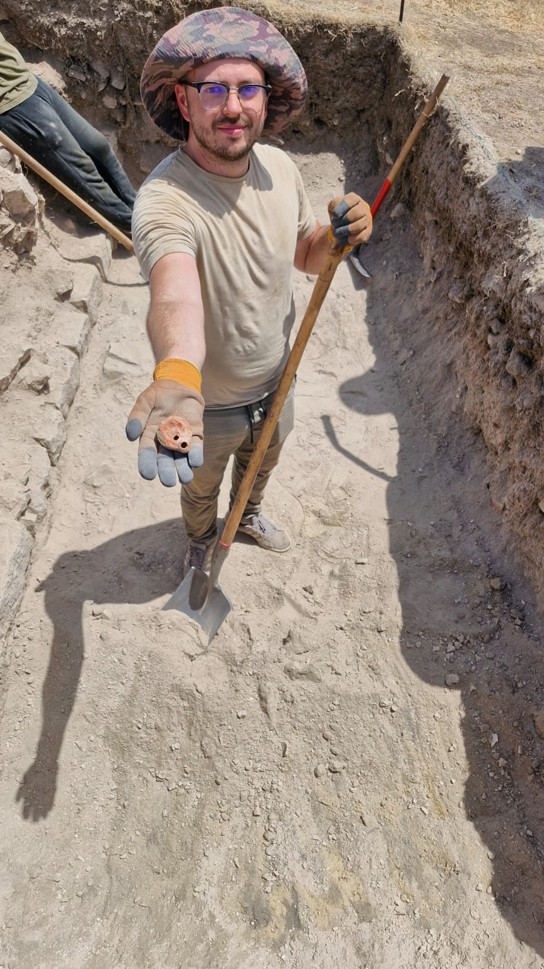
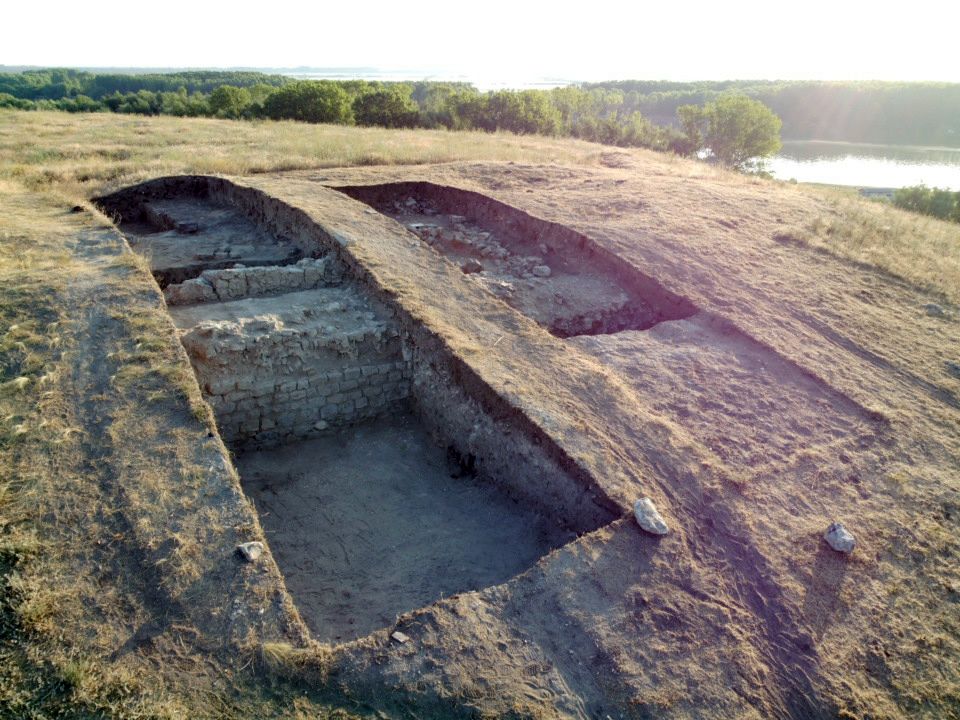
In 2024, the Institute of Archaeology of Iași, of the Romanian Academy, through Dr. Dan Aparaschivei, started a systematic archaeological research project at Salsovia, for a period of at least 10 years, in collaboration with specialized institutions in Iași and with colleagues from ICEM Tulcea.
In a general key, we propose that through this research we expand the horizon of knowledge about the fortifications on the Danubian limes in the province of Moesia Inferior/Scythia, which present quite a few research gaps, both for the early Roman period, but also for the period after the 4th century AD. Identifying the role and impact of the civilian settlements around this type of castrum/fortified fortress is also a goal that could add value to the quantity and quality of information we have available to date. Also, an x-ray of the pre- and post-Roman situation is required, especially since the research so far has demonstrated the certain existence of both a Hellenistic (Getic) period dwelling, on the plateau to the west of the fortress, and a mid-Byzantine dwelling, not located with certainty until now. The exact establishment of the stratigraphy of the settlement, as well as the relationships between the various elements of this archaeological complex, with military settlements, surrounding civilian settlements, possible rural residential nuclei, etc. is imperatively necessary.
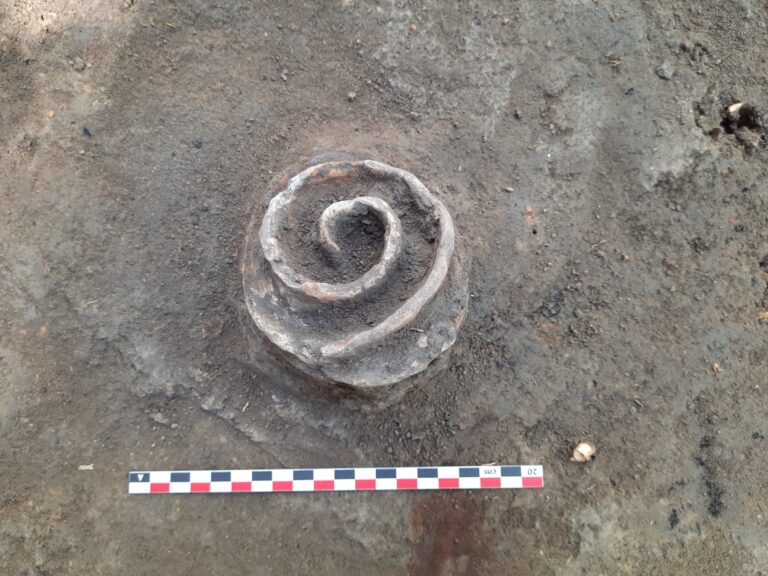
As specific objectives of the research, we mention: • establishing a coherent and complete stratigraphy of the archaeological site “Salsovia Fortress” • identifying as many urban elements as possible throughout the evolution of this important fortress on the Danubian limes • exploring the civilian settlements in the area and correlating the stages of habitation with the evolution of the fortification • analyzing the identified artifacts and contextualizing them, in order to establish the chronological stages related to the evolution of the fortress, but also of the civilian settlements • simultaneously starting some primary conservation initiatives and, then, carrying out conservation projects and, possibly, restoring and enhancing the discovered monuments • implementing other types of non-destructive research such as electro-resistivity profiles, to duplicate geo-magnetic data We have already conducted two systematic research campaigns at Salsovia, with sometimes spectacular results.