
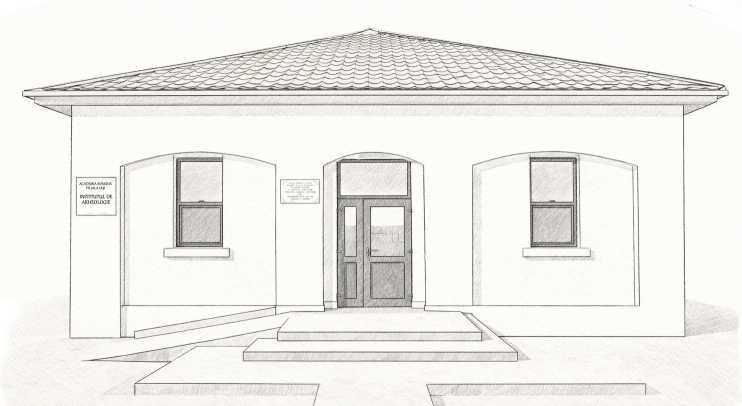

The Institute of Archaeology in Iași has its roots in the early development of archaeological research within the academic environment of “Alexandru Ioan Cuza” University. Its story begins in the early twentieth century, when the foundations of institutional archaeology in Iași were laid through teaching, fieldwork, and the creation of collections. A key moment came in 1916, when Professor Orest Tafrali founded the Museum of Antiquities, conceived as a working space for research and teaching alike. Closely connected to the University’s Chair of Archaeology, the museum played a central role in advancing field investigations and building one of the region’s earliest archaeological collections. As research activity expanded, so too did the need for a dedicated institutional framework. This vision gradually took shape in the following decades. In 1941, the “A.D. Xenopol” Institute of Romanian History was established, later consolidated as a distinct research institution. Within it, the Section of Ancient History and Archaeology, created in 1953, became a driving force behind archaeological research in the region, fostering collaboration between university scholars and museum specialists. By the second half of the twentieth century, Iași had emerged as a major centre for archaeological research. The launch of the journal Arheologia Moldovei in 1961 provided an important platform for sharing research results, both locally and nationally, and contributed to the growing visibility of the Institute’s work. In 1990, after decades of development, the Section of Archaeology became an independent institution: the Institute of Archaeology of the Romanian Academy, Iași Branch.
Today, the Institute carries out a wide range of research projects, from prehistoric to historical periods, combining fieldwork with interdisciplinary approaches and international collaboration. Its mission is to advance knowledge of the human past, to contribute to the protection and promotion of archaeological heritage, and to support the training of new generations of researchers through academic and scientific engagement.